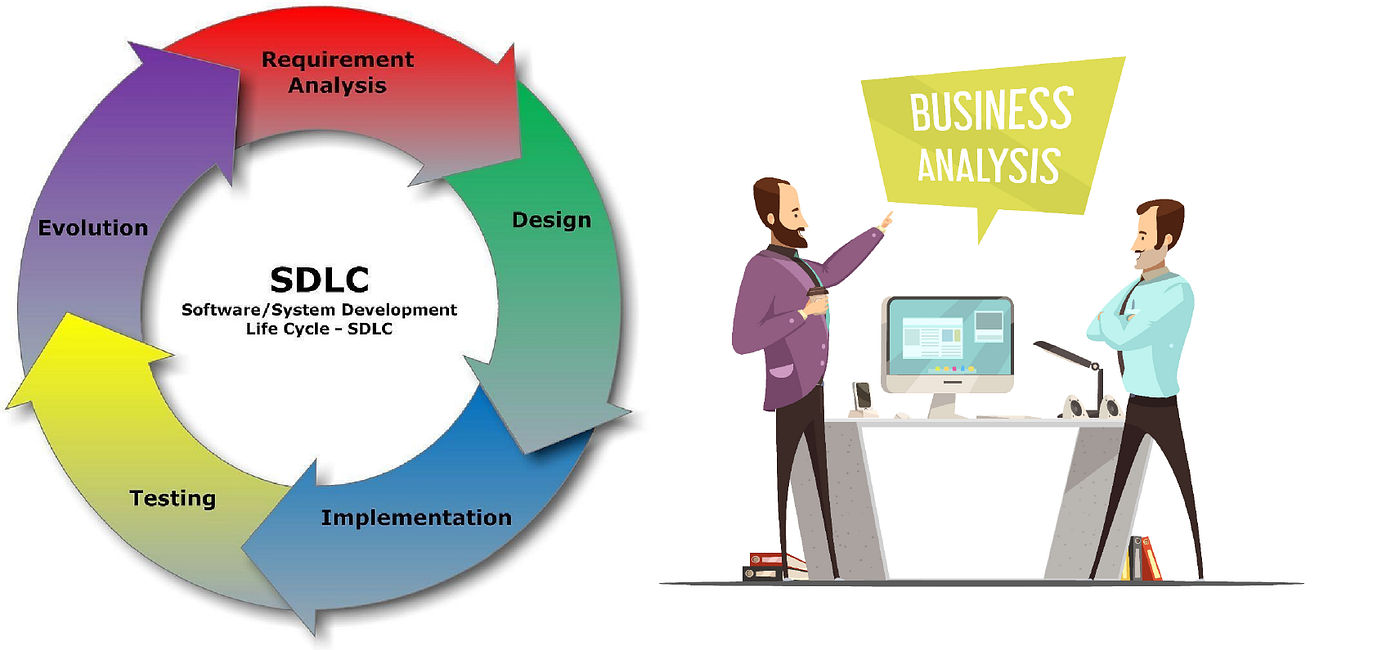
As a business analyst, your role unfolds across the seven distinct phases that characterize a typical project.
In this article, I will take you through the key responsibilities and contributions you as a business analyst makes at each stage of the software development process.
Project Initiation
The initial phase involves identifying potential projects, assessing feasibility, and obtaining financial approvals.
The business analyst identifying opportunities and creating comprehensive business case documents. Without a business analyst, crucial opportunities might be overlooked, and the foundation of the project may lack the necessary financial support.
At the inception, your focus lies in identifying viable projects, assessing their feasibility, and presenting comprehensive business cases to senior management.
Planning and Requirements Definition
Once the project is greenlit, detailed planning takes place. The business analyst plays a central role in this phase by contributing to requirements planning.
They help create a framework for managing scope changes and risks, ensuring a smooth project flow.
Additionally, during business requirement definition, the business analyst engages in eliciting and analyzing requirements, culminating in the creation of the Business Requirements Document (BRD).
Without a business analyst, the project risks lacking a clear roadmap and well-defined requirements.
Design
The business analyst hands over the BRD to the Technical Architect, who then creates high and low-level design documents.
These documents guide the development phase.
Without a business analyst, the risk of misalignment between technical design and business requirements increases, leading to potential rework and delays.
These design documents, in turn, guide the developers in creating the actual programs.
As a business analyst, your responsibility here is to ensure alignment between design and requirements.
Development
In the absence of a business analyst, developers might face challenges in understanding and implementing the requirements accurately.
In the development phase, developers take center stage, translating design specifications into functional programs.
Testing and Acceptance
Testing is a multi-faceted phase involving unit, integration, system, and user acceptance testing.
Unit testing becomes crucial, where each program undergoes individual scrutiny. Subsequently, integration and system testing combine these programs, ensuring seamless functionality.
Without the business analyst’s oversight, there is a higher chance of missing functional aspects, leading to a suboptimal product.
The application then moves to customer testing, where they meticulously assess its alignment with specified requirements.
The client’s thorough testing in the user acceptance phase could reveal shortcomings that might have been prevented with a business analyst’s detailed understanding of the initial requirements.
Your role as a business analyst involves submission of test cases and active participation in user acceptance testing.
Implementation
With successful testing and customer approval, the project passes to the operations team.
They oversee the deployment of the application in the production environment, ensuring a smooth transition.
The business analyst role may involve communicating any user access requirements and facilitating a seamless go-live process.
Maintenance
Post-implementation, the operations team continues to monitor and maintain the system. Any updates, patches, or issues fall under their purview.
As a business analyst, your communication management skills remain crucial during this phase.